

One of the more preventable mistakes in scheduled waste compliance: paying for a leaching test, waiting for the certificate, and finding out it will not hold up for DOE submission.
Under the Environmental Quality Act 1974, a failed DOE submission for misclassifying scheduled waste can incur penalties of up to RM500,000. The leaching test that prevents that penalty costs a fraction of that figure, but only if you order the right one.
TCLP, TTLC, and STLC each measure something different. Submit the wrong one, and you restart the extraction cycle from scratch: same cost, same 18-hour rotation process, back to day one on your disposal timeline.
For EHS officers managing scheduled waste, the correct waste characterization testing protocol determines whether your compliance timeline holds.
This Biochem Malaysia guide covers what each test measures, why DOE accepts one over the others, the three submission mistakes that cause most re-runs, and a decision routing table to match your compliance objective to the correct protocol.
Key Takeaways
- TCLP (US EPA Method 1311) is the test mandated by the Malaysian DOE for scheduled waste leachability verification. TTLC and STLC originate from California’s Title 22 and are not accepted as standalone evidence of compliance in Malaysia.
- TTLC measures total chemical concentration inside the waste matrix. TCLP measures how much of that concentration can escape into groundwater. Different tests, different answers.
- Requesting TTLC when DOE requires TCLP means a full re-run: same cost, full turnaround wait, back to day one.
- An ISO/IEC 17025-accredited TCLP Certificate of Analysis usually takes 7 to 10 working days from sample submission.
TCLP, STLC, TTLC: What Does Each Test Actually Measure?
TCLP, TTLC, and STLC testing each target a different property of the waste; the certificate produced by one cannot substitute for another.
TCLP, TTLC, and STLC at a Glance
| TCLP | TTLC | STLC | |
| Full name | Toxicity Characteristic Leaching Procedure | Total Threshold Limit Concentration | Soluble Threshold Limit Concentration |
| What it measures | How much of a contaminant escapes into liquid under simulated landfill conditions | Total mass of a substance inside the waste matrix | How much of a substance dissolves in a citric acid buffer solution |
| Extraction method | 18-hour rotation in acidic fluid | Full matrix acid digestion | 48-hour citric acid buffer extraction |
| Key parameters | Lead (Pb), Arsenic (As), Chromium (Cr), Cadmium (Cd), volatile and semi-volatile organics | Full elemental concentration profile | Soluble fraction of regulated metals |
| Regulatory origin | US EPA Method 1311 | California Title 22 (CCR) | California Title 22 (CCR) |
| Malaysian DOE status | Mandated for scheduled waste compliance submissions | Baseline screening tool; not accepted as standalone | Supporting reference data; not accepted as standalone |
A factory can pass the Total Threshold Limit Concentration (TTLC) thresholds and still fail TCLP. TTLC tells you what is in the waste. A Toxicity Characteristic Leaching Procedure (TCLP) tells you what will escape from it. DOE inspectors will not accept a TTLC or Soluble Threshold Limit Concentration(STLC) certificate in place of a TCLP result.
For the full hazardous waste characteristics and TCLP thresholds across regulated metals, refer to the US Environmental Protection Agency (EPA) reference documentation.
Why Getting the Wrong Test Costs More Than the Re-Run
A TCLP extraction follows a fixed sequence: solid screening, 18-hour rotation, filtration, acid digestion, and ICP-MS analysis. If the wrong test is ordered, that sequence runs to completion. The factory pays again and waits another full cycle.
Scheduled waste sitting on-site past its storage limit adds its own compliance risk. According to the Environmental Quality (Scheduled Wastes) Regulations 2005, the on-site storage maximum is 180 days. Each additional day beyond that is a potential audit finding, and a delayed certificate does not pause that clock.
Unsure whether your waste stream qualifies as scheduled waste in the first place or how to register it in the eSWIS (Electronic Scheduled Waste Information System)? Biochem’s guide to scheduled waste handling and disposal in Malaysia covers the 77 SW categories, common misclassification mistakes, and the most common DOE audit criteria.
How Does Heavy Metal Leaching Determine Which Test DOE Accepts?
The Malaysian DOE’s regulatory question is about mobility. Can hazardous materials migrate from the waste matrix into groundwater under landfill conditions? A waste stream with high total metal content can pass TCLP if those metals are locked into the matrix and cannot dissolve.
TCLP is designed to answer exactly that question.
Industrial fly ash, Integrated Effluent Treatment System (IETS) sludge, clinical residues, and manufacturing waste contain heavy metals including Lead (Pb), Arsenic (As), and Chromium (Cr).
Under landfill conditions, those metals dissolve into leachate that drains into surrounding soil and groundwater.
TCLP models this migration pathway directly. The acidic extraction fluid and 18-hour contact time replicate the conditions under which hazardous elements mobilize in a real landfill. That is why DOE accepts TCLP data as evidence of environmental safety, and why total-concentration tests like TTLC are not a substitute.
According to the US EPA, TCLP was developed to simulate the leaching a waste would undergo if disposed of in a municipal solid waste landfill, which is why the extraction conditions are standardized and non-negotiable.
Heavy metal migration from waste disposal sites connects directly to effluent compliance. Why water testing matters for Malaysian businesses covers that link under the Environmental Quality Act 1974.
What is Solidification and Stabilization (S/S) testing, and when does TCLP apply?
Solidification and Stabilization (S/S) binds hazardous materials (clinical incinerator fly ash, for example) into a stable cement matrix before disposal. TCLP verifies the binding worked.
After treatment, TCLP confirms the heavy metals are no longer mobile. International protocols including JLT-13 and ANS 16.1 are sometimes used to verify encapsulation performance, but TCLP is the Malaysian regulatory standard.
If S/S treatment fails TCLP, the waste retains its scheduled status regardless of TTLC results.
ISO/IEC 17025-accredited laboratories like Biochem Malaysia provide scheduled waste analysis covering TCLP testing for both S/S-treated and untreated scheduled waste streams.
Three Common TCLP Submission Mistakes
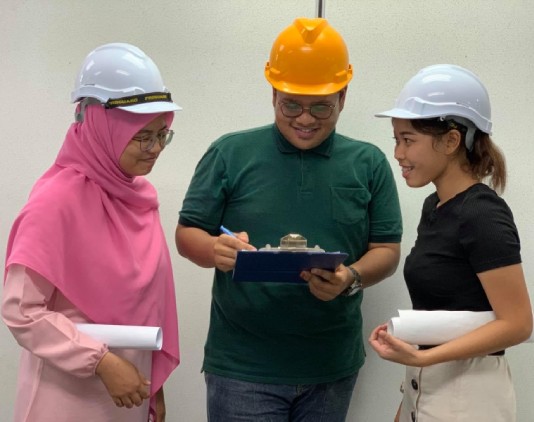
The same three errors appear across industries. Each triggers a re-run, a delayed certificate, and a compliance window that stays open longer than it should.
Mistake 1: Ordering TTLC When DOE Requires TCLP
Issue: The factory submits a TTLC extraction, receives a passing result, and presents it to DOE. The inspector rejects it. TTLC measures total concentration; it does not measure leachability. DOE requires leachability data under EQR 2005.
Avoid it: Confirm the protocol is TCLP (US EPA Method 1311) before submitting. Ask for the method reference on the quote, not just on the certificate.
In practice: A TCLP re-run costs the same as the original submission and resets your turnaround clock. A pre-submission call prevents it.
Mistake 2: Not Declaring Volatile Organic Compounds Before Extraction
Issue: The factory submits a sample without declaring volatile organic compounds (VOCs). The laboratory uses a standard open-vessel extraction. VOC concentrations evaporate during the 18-hour rotation. The certificate shows artificially low readings and cannot be used for compliance.
Avoid it: Disclose your process inputs when submitting. If the waste stream involves solvents, cleaning agents, or volatile organic compounds, tell the laboratory so it can assign a Zero-Headspace Extractor (ZHE).
In practice: A ZHE extraction is a standard protocol adjustment. It adds no significant cost. An invalid certificate due to the wrong vessel requires a full re-run.
Mistake 3: Undersized Sample Triggering Re-Submission
Issue: The factory submits less than the minimum sample volume. The laboratory cannot complete duplicate QC runs. The submission is returned or the result is flagged as inconclusive.
Avoid it: Submit at least 1 kilogram or 1 liter, even though the technical minimum is 100 grams or 100 milliliters. The extra volume covers solid screening, duplicate QC runs, and buffer calculations.
In practice: Shipping a larger sample costs almost nothing. A re-submission means another full extraction cycle and another wait.
What Makes a TCLP Sample Representative?
A valid TCLP result requires more than the right volume. The sample must accurately reflect the full waste stream, meaning it cannot be taken from a single point, a single batch, or the most accessible corner of a waste pile.
For solid waste, EPA guidelines require samples to be collected from multiple locations within the waste mass, then combined and homogenized before extraction. This accounts for variability in particle size, moisture, and composition. A sample from one location only produces results for that location.
The sampling strategy depends on how the waste is generated. Highly uniform continuous-process waste requires fewer collection points than batch waste with variable composition. Describing your process to the laboratory before collection confirms the right approach.
TCLP and the Regulation 7(1) Disposal Pathway
A TCLP result below DOE thresholds is the basis for a Regulation 7(1) exemption under the Environmental Quality (Scheduled Wastes) Regulations 2005.
A successful exemption reclassifies the waste from scheduled to standard industrial residue, enabling routine disposal. The TCLP Certificate of Analysis is the evidence; the exemption application follows from it.
Which Test Protocol Matches Your Compliance Outcome?
Match your compliance objective to the correct protocol before submitting.
If unsure which row applies, describe your waste stream to the lab first. A 15-minute consultation is cheaper than a re-run.
Waste Characterization Test Selection Guide
| Compliance Outcome | Recommended Protocol | Key Parameters Monitored |
| Leachability verification for ISO/IEC 17025-accredited lab reporting | TCLP (US EPA Method 1311) | Lead (Pb), Arsenic (As), Chromium (Cr), Cadmium (Cd), Volatile Organics, Semi-Volatile Organics |
| Total chemical baseline profiling or internal auditing | TTLC | Absolute elemental mass concentration across full matrix |
| Comparative international contract fulfillment (California-standard export) | STLC / JLT-13 | Citric acid solubility limits; water-soluble fraction |
Some manufacturers run TTLC alongside TCLP to build an internal waste baseline. TTLC does not replace TCLP for DOE compliance, but together they provide a more complete characterization record for internal audit purposes.
TCLP tests specifically for the toxicity characteristic of hazardous waste. Corrosive, reactive, or ignitable waste requires separate testing. A passing TCLP result does not clear those characteristics.
Accredited Testing, Reliable Results
Supporting diverse industries with ISO-accredited testing and trusted analytical data since 1977.
How TCLP Testing Works at Biochem
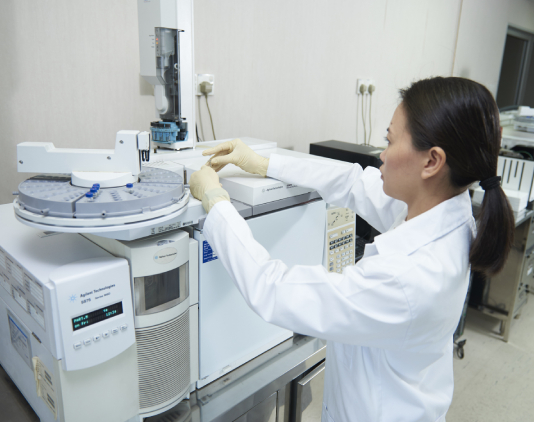
A TCLP submission at Biochem follows five steps from consultation to certificate.
Step 1: Pre-Submission Consultation
Call Biochem’s lab team before collecting the sample. Provide your waste stream type, process, and compliance objective. The chemist confirms the protocol, ZHE requirement, and minimum sample volume.
This step takes under 15 minutes and prevents the most common re-run scenarios.
Step 2: Sample Collection and Submission
- Collect a representative sample in clean, non-reactive containers
- Submit a minimum of 1 kilogram or 1 liter (covers QC duplicate runs and solid screening)
- Label with your factory name, waste stream type, and SW code (if already assigned)
- Drop off at any Biochem branch in Penang, Johor Bahru, or Selangor, or arrange courier collection
- Submit promptly: samples containing volatile organics have holding times as short as 14 days from collection to extraction; delays beyond this invalidate VOC results
Step 3: Solid Content Screening
On receipt, the laboratory measures solid content. The result determines the extraction route: standard 18-hour rotation, or direct filtration for liquids below 0.5% solids. VOC profile is confirmed at this stage.
Step 4: Extraction and Analysis
TCLP testing runs the extraction for 18 hours in a rotation apparatus. The leachate is filtered and analysed by ICP-MS for heavy metals and GC-MS for organic compounds where required. Duplicate QC runs are completed at this stage.
Step 5: Certificate of Analysis Delivery
The completed ISO/IEC 17025 accredited Certificate of Analysis is issued within 7 to 10 working days of sample receipt.
The certificate documents extraction method, parameters, and results, with the accredited lab reference required for DOE submission.
Waste characterization is one part of a broader compliance picture. Environmental monitoring in reducing industrial risks covers how to build a plant-wide framework before a DOE audit forces the issue.
Get the Protocol Right Before the Sample Leaves Your Factory

The re-run fee is the smallest part of getting waste characterization testing wrong. It resets your disposal timeline, delays your DOE submission, and leaves scheduled waste on-site longer than your permit allows.
In Malaysia, TCLP is the default. Your DOE submission needs a TCLP Certificate of Analysis from a reputable and certified laboratory, and your chemist should confirm that before the sample leaves your factory.
Why Malaysian Manufacturers Test With Biochem Laboratories
Biochem Malaysia is an established testing laboratory specializing in hazardous waste testing in Malaysia, chemical analysis, and environmental testing services since 1977.
Most TCLP re-runs trace back to the three mistakes covered in this article: wrong protocol, undeclared VOCs, or undersized samples. Biochem’s pre-submission review is designed to catch all three before the extraction cycle begins, at no additional charge.
- Pre-submission consultation included: Biochem’s chemists confirm protocol, extraction vessel, and VOC requirements before a single extraction begins, eliminating the most common re-run scenario
- Three branch locations: Penang (headquarters), Johor Bahru, and Selangor, covering Malaysia’s primary manufacturing corridors
- Accredited since 1977: 47 years of scheduled waste and chemical analysis testing for Malaysian manufacturers
Accredited Testing, Reliable Results
Supporting diverse industries with ISO-accredited testing and trusted analytical data since 1977.
FAQs
Can a factory use STLC or TTLC data interchangeably with TCLP for Malaysian DOE submission?
No. Malaysian DOE mandates TCLP (US EPA Method 1311) for leachability compliance under the Environmental Quality (Scheduled Wastes) Regulations 2005.
STLC uses a citric acid buffer extraction: a different solvent, different contact conditions, and a different measurement framework than TCLP. TTLC measures total absolute concentration rather than liquid mobility. Neither produces a certificate DOE will accept in place of a TCLP result.
What happens if TCLP samples are not submitted to the laboratory within the holding time?
Missing the holding time invalidates VOC results. Samples containing volatile organics must reach the laboratory within 14 days of collection. After this window, volatile analytes degrade and the extraction cannot produce valid VOC readings. The sample must be recollected and resubmitted.
For non-volatile heavy metal analysis, holding times are longer. Confirm the specific requirements for your parameter panel at the time of submission.
How does the presence of volatile organic compounds (VOCs) change the TCLP extraction process?
When a waste profile contains volatile organic compounds (VOCs), the laboratory uses a Zero-Headspace Extractor (ZHE) instead of a standard vessel.
The ZHE prevents volatile analytes from evaporating during the 18-hour rotation. Without it, VOC readings will be artificially low and the certificate unusable.
Standard open-vessel extractions apply only to non-volatile organics and heavy metals.
If a factory produces two separate waste streams from the same process line, can both be submitted under a single TCLP extraction?
No. Each waste stream requires a separate TCLP extraction, even from the same process line.
Streams can differ in particle size, moisture content, pH, or composition, producing distinct leachate profiles. Combined samples invalidate the extraction, and the certificate cannot verify compliance for either stream.
Get In Touch With Us And Get A Quote
Drop us a line for more service details and pricing information.