


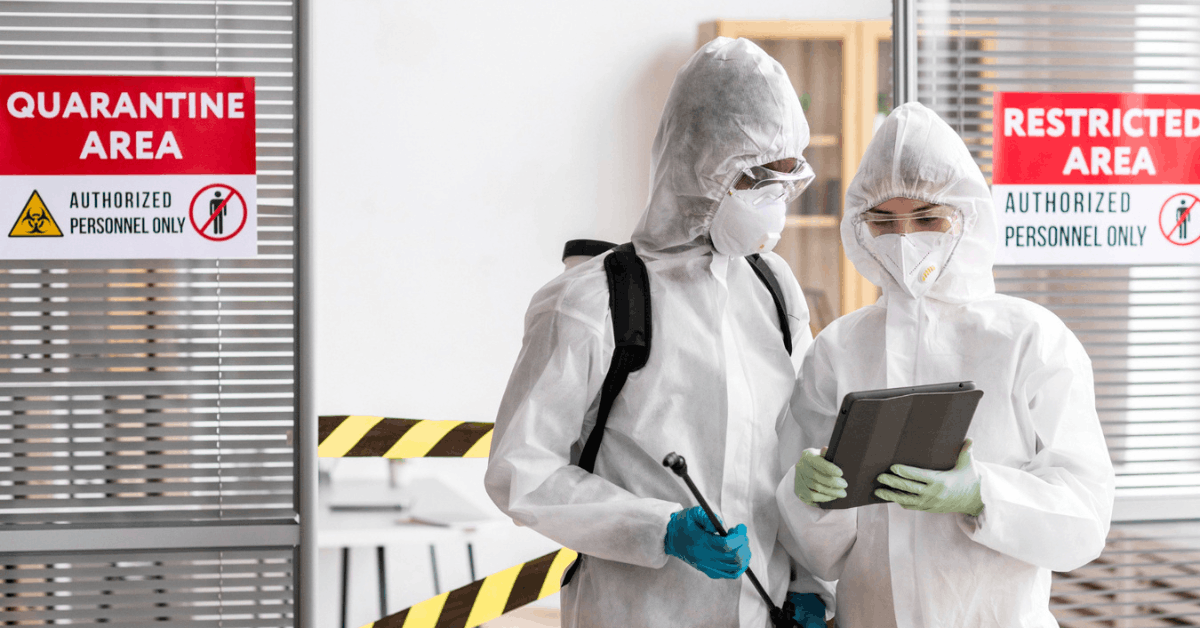
While heavy industries, laboratories, or manufacturing plants are filled with warning labels and protective gear, a clean, modern office with plush carpets and air conditioning is commonly perceived as safe.
In reality, chemical hazards exist in almost every workplace environment, often embedded in routine operations, familiar products, and everyday equipment. Unlike obvious industrial chemicals, these hidden chemical hazards are frequently overlooked.
The International Labour Organisation (ILO) estimates that over 1 billion workers globally are exposed to hazardous chemicals every year, often without recognising it until chronic illness begins to surface.
This “out of sight, out of mind” approach to chemical safety is a liability for many employers, as unmonitored exposure can lead to chronic health issues for staff, severe operational downtime, and significant legal penalties under Malaysian safety laws.
This guide will uncover the hidden chemical hazards in everyday workplaces and explain how a professional Chemical Health Risk Assessment (CHRA) can help businesses identify risks early, maintain regulatory compliance, and protect both their people and operations.
What Are Chemical Hazards in the Workplace?
 Freepik
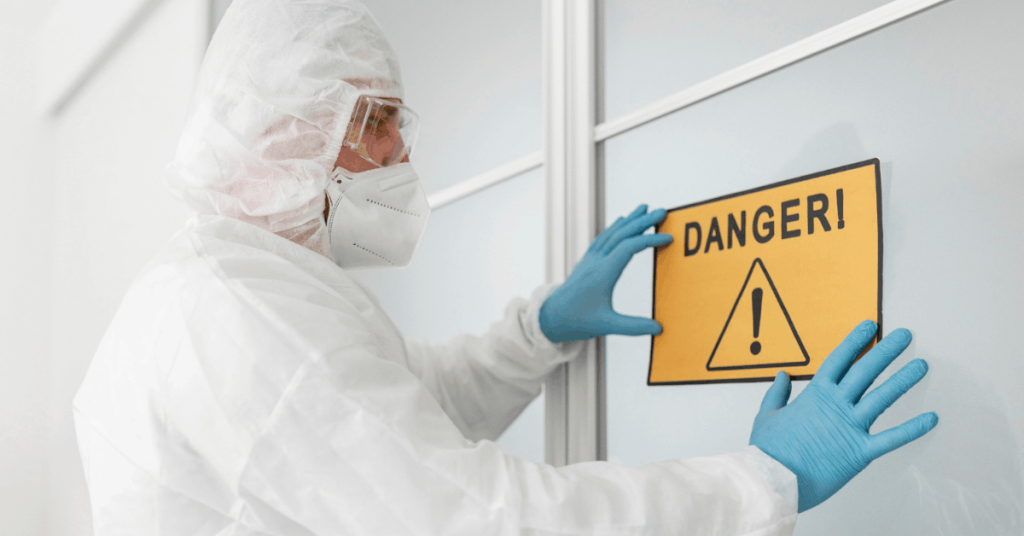
Chemical hazards are substances that have the potential to cause harm to people, property, or the environment through their chemical properties. While physical hazards like a wet floor or exposed wiring are immediately visible, chemical hazards can be deceptive.
These hazards may exist in solid, liquid, gas, vapour, dust, or fume form and are present across a wide range of industries. From manufacturing and laboratories to offices and commercial facilities, no workplace environment is immune to this risk.
Three Categories of Chemical Hazards
The Globally Harmonized System (GHS) classifies chemical hazards according to their specific effects and risks. Understanding these categories helps employers recognise risks beyond obvious industrial chemicals. There are currently 29 GHS hazard classes divided into three main groups:
- Physical Hazards (17 Classes)
These chemicals pose a threat to physical safety, often due to their volatility or flammability. Examples include:
- Flammable solvents and fuels
- Pressurized gases
- Reactive substances and oxidisers
Improper storage or handling can lead to fires, explosions, or the sudden release of toxic gases, causing catastrophic physical injuries or property damage.
- Health Hazards (10 Classes)
Exposure to these chemicals can cause immediate injuries or lead to long-term occupational illnesses. Examples include:
- Carcinogens (cancer-causing agents)
- Corrosives (acids that burn skin)
- Sensitisers (chemicals that cause allergic reactions)
Health impacts may range from minor skin irritation to severe respiratory failure or organ damage.
- Environmental Hazards (2 Classes)
These substances may not immediately harm a worker, but can cause catastrophic damage to the ecosystem if released into drains, waterways, or soil. Examples include:
- Toxic industrial waste
- Chemical run-off from cleaning or production processes
- Persistent pollutants that accumulate in the environment
Businesses that operate without proper oversight often underestimate how easily everyday processes can contribute to environmental pollution.
Note: Routine environmental monitoring is essential to ensure your facility’s discharge meets Department of Environment (DOE) standards.
How Do Chemicals Enter Your Body?
To protect your workforce, you must understand the specific pathways through which hazardous chemicals enter the body:
- Inhalation (Breathing): Inhalation is the most common route of workplace exposure, as employees may inhale vapours from solvents, dust from packaging materials, or fumes from welding and soldering.
- Absorption (Skin & Eyes): Certain chemicals, such as industrial solvents and pesticides, can pass directly through the skin into the bloodstream. Corrosive chemicals (acids or alkalis) can also cause immediate local burns upon contact.
- Ingestion (Swallowing): While this is rarely intentional, ingestion typically occurs when workers eat, drink, or smoke with contaminated hands, transferring chemicals from their gloves or skin into their mouth. This can also happen if they consume contaminated food.
- Injection (Wound): Though less common, chemicals can enter the bloodstream if a sharp object, like a needle or broken glass, or a high-pressure nozzle, pierces through the skin.
Common Hidden Chemical Hazards in Workplaces
Many chemical risks come from ordinary materials and routine processes that appear harmless because they are familiar or used daily. Across offices, factories, laboratories, and commercial facilities, these exposures are often overlooked until health complaints or compliance issues arise.
The Office & Administrative Areas
 Freepik
Modern workplaces designed for comfort and aesthetics can still pose invisible chemical risks. Carpets, office furniture, adhesives, and printing materials can release pollutants into the air, particularly in enclosed, air-conditioned spaces.
Poor ventilation in these spaces allows pollutants to accumulate over time, contributing to what is commonly referred to as “Sick Building Syndrome.”
Indoor Air Quality (IAQ) Risk
- Ozone Emissions
Older photocopiers and laser printers can emit ozone during operation, which can cause respiratory irritation and headaches if placed in poorly ventilated corners. - New Office Off-Gassing
Freshly renovated offices often have high levels of Volatile Organic Compounds (VOCs), such as formaldehyde, which off-gas from new furniture, carpets, and fresh paint for months after installation. Prolonged exposure to elevated VOC levels has been linked to respiratory discomfort, eye irritation, and reduced concentration.
Stationery & Supplies
- Solvents in Supplies
Everyday items such as correction fluids, whiteboard markers, and industrial-strength glues may contain solvents like toluene or xylene. In small, enclosed meeting rooms, the accumulation of these vapours can cause dizziness and nausea. - Glycol Ethers
It is frequently found in paints and inks. Unlike strong acids, these colourless solvents can be absorbed through the skin without causing an immediate burn or rash, yet they pose serious risks to the nervous system and reproductive health over time.
Cleaning & Facility Maintenance
 Freepik
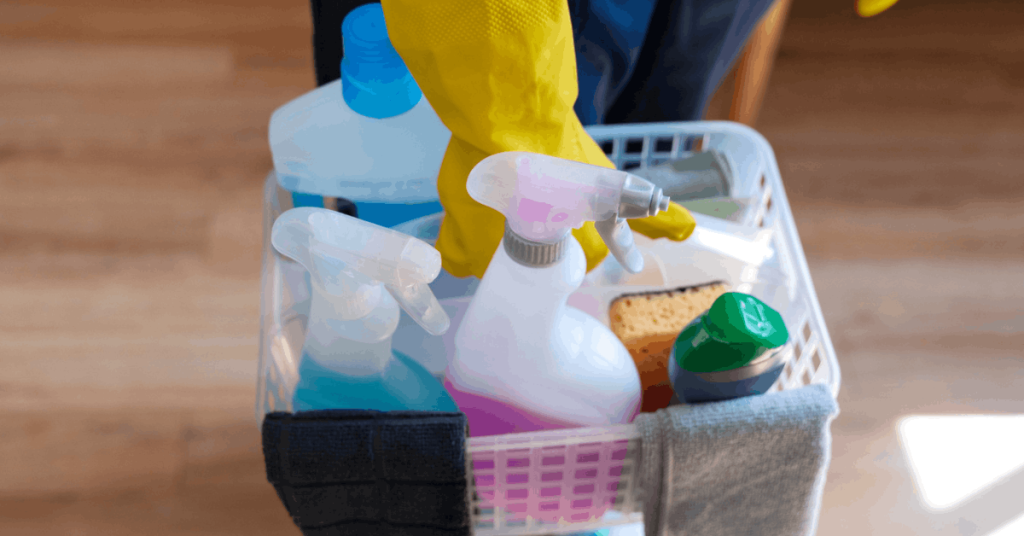
Routine cleaning products are among the most underestimated chemical hazards in workplaces. Janitorial closets are often the most dangerous areas due to improper storage and mixing practices.
- The Mixing Risks
The most common and dangerous mistake is mixing bleach with ammonia-based cleaners, such as glass cleaners. This reaction creates chloramine gas, which can cause severe lung damage or even death. - Unlabeled Liquids
Cleaners are often bought in bulk and transferred into smaller spray bottles. If these secondary containers are left unlabeled, employees may mistake strong degreasers for mild soap. - Storage Hazards
Storing flammable chemicals such as floor wax or polish near heat sources, or placing oxidisers near reactive substances, creates a severe fire risk.
Warehousing, Production & Logistics
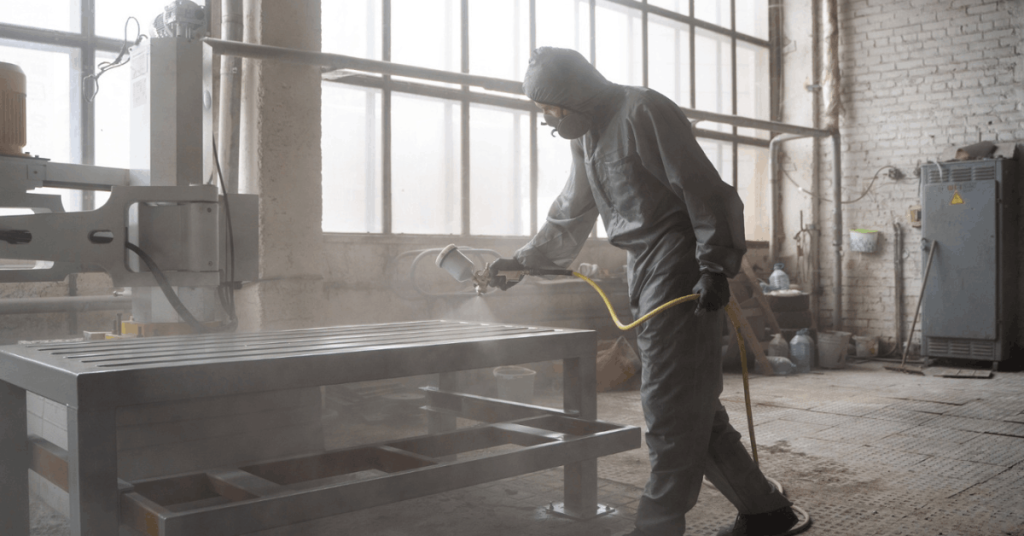
In manufacturing and logistics hubs, chemical exposure isn’t limited to the main production line. Auxiliary activities often introduce severe risks that go unnoticed.
Substances such as solvents, acids, alkalis, resins, and process additives may be used in small quantities but on a daily basis.
Routine Operational Hazards:
- Battery Charging Stations
Electric forklifts use lead-acid batteries that emit explosive hydrogen gas and corrosive acid mists during charging. Without proper ventilation, this is a ticking time bomb.
- Packaging Fumes
Heat-shrink wrapping tunnels and plastic sealing machines can release toxic fumes from heated polyethylene or PVC plastics.
- Pest Control Residue
Aggressive pesticides sprayed in warehouse corners can accumulate, posing inhalation risks to staff working in those zones.
Dust & Fume Hazards (Invisible Particles):
- Welding Fumes
When metal is heated, it creates a toxic plume containing microscopic particles of hexavalent chromium, nickel, and manganese. These are often invisible to the naked eye but can lead to long-term lung disease.
- Thermal Degradation
Heating plastic or rubber, such as in injection moulding, can release toxic gases, such as formaldehyde, that are not present in the solid raw material.
- Silica & Wood Dust
Cutting concrete or tiles creates respirable silica dust, which causes permanent lung scarring (Silicosis). Similarly, hardwood dust is classified as a Group 1 Carcinogen.
For workplaces using equipment or processes that generate fumes, vapours, or airborne contaminants, Local Exhaust Ventilation (LEV) systems play a key role in removing pollutants at the source.
Note: Under the USECHH Regulations 2000, employers must ensure their LEV systems are inspected and tested by a registered Hygiene Technician at least once every 12 months to ensure they are effectively capturing contaminants.
Analytical Excellence Since 1977
Trusted by industry leaders for precise, compliant, and high-quality analytical results.
Why Uncontrolled Chemical Risks Are Dangerous?
Overlooking chemical safety may expose your business to various risks that become your liability. When workplace chemical risks go unmanaged, the consequences can ripple throughout the business, affecting your employees’ safety and the company’s bottom line.
Health Risks
The most immediate cost of unmanaged exposure is human health. Chemical risks in the workplace can cause both acute and chronic health effects, depending on the substance, level of exposure, and duration of exposure.
- Acute Exposure
This occurs when an employee is exposed to a high concentration of a chemical over a short period. The effects are immediate and often severe, such as chemical burns, dizziness from fumes, or nausea. - Chronic Exposure
It involves repeated exposure to low levels of a chemical over a long period that may lead to serious conditions such as occupational asthma, dermatitis, respiratory disease, neurological effects, or even cancer. Since symptoms develop slowly, these risks are often underestimated or ignored until significant damage has occurred.
Business and Operational Risks
Apart from workers’ health concerns, uncontrolled chemical risks can harm a business financially and operationally.
- Operational Downtime: Accidents or leaks often force immediate shutdowns for cleanup and investigation, halting production and delaying client orders.
- Financial Penalties: Businesses face higher insurance premiums, costly medical compensation claims, and legal fees.
- Loss of Skilled Workers: High absenteeism due to “sick building syndrome” or injury leads to a loss of productivity and experienced personnel.
- Reputation Damage: In the age of social media, being labelled an unsafe workplace can tarnish your brand image and make it difficult to attract talent or clients.
Legal and Compliance Risks
In Malaysia, chemical safety is a strict legal requirement enforced by the Department of Occupational Safety and Health (DOSH), also known as Jabatan Keselamatan dan Kesihatan Pekerjaan (JKKP).
Under the Occupational Safety and Health Act (OSHA) 1994 and its 2022 Amendment, effective in June 2024, penalties for non-compliance have increased significantly.
Any workplace that uses, stores, or handles hazardous chemicals must comply with the Occupational Safety and Health (Use and Standards of Exposure of Chemicals Hazardous to Health) Regulations 2000 (USECHH), regardless of industry size or sector.
Failure to do so exposes your business to severe consequences, such as:
- Regulatory Fines
Under the newly amended OSHA 1994 to OSHA (Amendment) 2022, employers who fail to ensure their workers’ safety can face fines of up to RM500,000, imprisonment of up to 2 years, or both. - Stop-Work Orders (SWO)
If an immediate danger is identified, such as a chemical leak or inadequate ventilation, DOSH has the authority to issue a Prohibition Notice, requiring you to shut down operations until the issue is rectified. - Civil Liability
Employees who suffer from occupational diseases such as industrial dermatitis or lung damage can sue for negligence. Without a CHRA report to prove you took reasonable precautions, your defence in court is significantly weakened.
- Denied Insurance Claims
Insurance providers may reject claims for workplace accidents if it is proven that the company failed to comply with mandatory safety regulations, leaving the business to cover all medical and compensation costs.
The Proactive Solution: Chemical Health Risk Assessment
 Freepik
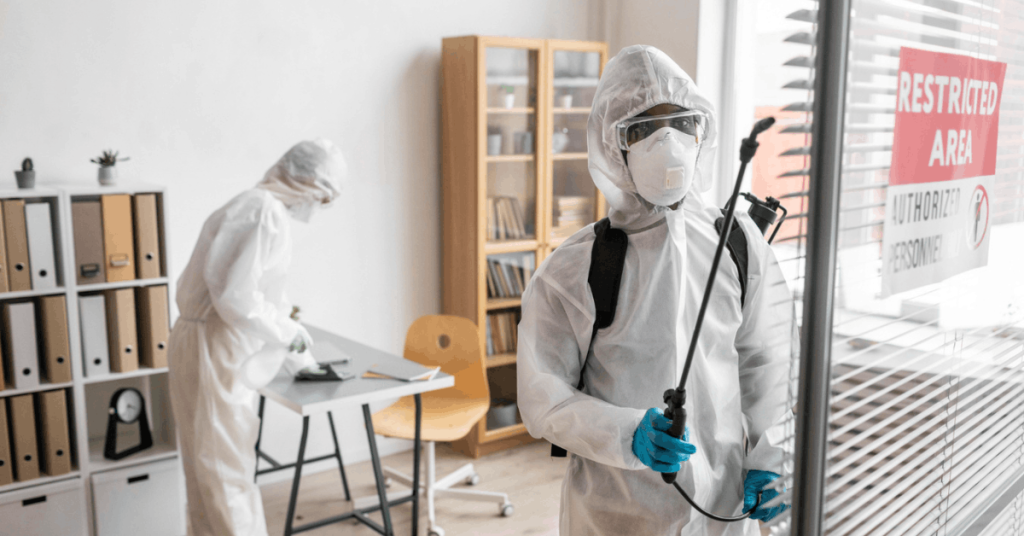
The most effective way to manage chemical hazards in the workplace is through a Chemical Health Risk Assessment (CHRA), a proactive, systematic approach mandated by DOSH under the USECHH Regulations 2000.
In Malaysia, a CHRA is a legally binding evaluation conducted by a DOSH-registered assessor to determine whether your current control measures, such as ventilation or PPE, are adequate to protect your workers.
Biochem Laboratories employs fully registered assessors and utilises ISO/IEC 17025-accredited testing methodologies (SAMM No. 020) to provide data-backed safety insights that stand up to regulatory scrutiny.
Unlike standalone consultants, Biochem is a full-service laboratory. If your CHRA identifies a significant risk, we can immediately proceed with the necessary follow-up actions without you having to hire a third party, such as a Chemical Exposure Monitoring (CEM) service.
The CHRA Process & Timeline
A proper assessment is a systematic process. BioChem ensures a seamless experience from the initial site visit to the final DOSH-compliant report.
| Assessment Stage | What Happens | Typical Turnaround |
| Pre-Assessment | Review of chemical inventory, Safety Data Sheets (SDS), process descriptions, and layout or floor plans | 1-3 working days |
| Site Assessment | Physical walkthrough, work unit identification, task observation, and staff interviews | 1-2 days (on-site) for SMEs
3-5 days (on-site) for larger facilities |
| Reporting | Risk evaluation, exposure assessment, review of existing control measures, and development of improvement recommendations | 14-21 working days |
| Submission & Briefing | Final presentation of the CHRA report and guidance on DOSH documentation and compliance requirements | Upon report completion |
Note: Timelines may vary based on facility size and the number of chemicals used. Please contact us for a detailed consultation.
Many chemical hazards are invisible to the naked eye. Explore all our safety & health assessment services to ensure your team is protected and your business is compliant.
Accredited Testing, Reliable Results
Supporting diverse industries with ISO-accredited testing and trusted analytical data since 1977.
How to Control Chemical Hazards in the Workplace?
Once you have identified the hazards and assessed the risks through a CHRA, the next step is to implement controls. You must control exposure to keep it below the Permissible Exposure Limits (PELs) set by Malaysian occupational safety regulations.
To do this effectively, safety professionals use a framework known as the Hierarchy of Hazard Control. This system prioritises controlling hazards at the source rather than relying solely on personal protection.
| Control Level | Description | Examples |
| 1. Elimination & Substitution | Remove the hazard entirely or replace it with a safer alternative | Replacing solvent-based cleaners with water-based products, switching to low-VOC paints |
| 2. Engineering Controls | Isolate people from the hazard through physical or mechanical means | Local Exhaust Ventilation (LEV) and enclosed processes |
| 3. Administrative Controls | Change how people work to reduce exposure | Standard Operating Procedures (SOPs), job rotation, hygiene practices, and warning signage |
| 4. Personal Protective Equipment (PPE) | Protect the worker directly when other controls cannot fully eliminate risk | Gloves, respirators, goggles, protective clothing |
Note: PPE should always be the last line of defence, not the primary control measure.
Practical Steps for Businesses: Where to Start?
Small and Medium Enterprises (SMEs) often lack dedicated safety officers, but compliance is still manageable with these four fundamental steps:
- Step 1: Inventory Management
You cannot manage what you don’t measure. Create a comprehensive Chemical Register listing all on-site chemical products, their quantities, and storage locations. This is a mandatory document under the USECHH Regulations 2000.
- Step 2: Safety Data Sheet (SDS) Management
Ensure you have a current Safety Data Sheet (SDS) for every chemical. SDSs must be physically available to workers in a folder or on a digital kiosk and must be less than 5 years old.
- Step 3: Proper Labelling
Never allow unidentified containers, and if you transfer chemicals from a drum to a smaller spray bottle, the bottle must be labelled immediately with the product name, hazard pictogram, and basic safety warnings, such as ‘corrosive’ or ‘flammable’.
- Step 4: Employee Training
The best safety systems fail if workers don’t understand them. Regular training sessions may help them learn to read SDSs and labels, understand the specific health risks of the chemicals they use, and follow emergency procedures for spills or accidental exposure.
Ensure Workplace Safety and Compliance with Biochem Today!
Chemical risks exist in nearly every workplace. Left unassessed, these exposures can quietly harm employee health, disrupt operations, and expose businesses to regulatory action. That’s why occupational safety and health assessment is crucial.
Biochem Laboratories offers professional Chemical Health Risk Assessment (CHRA) to help you identify, evaluate, and control hidden chemical hazards before they impact your business.
Why Businesses Choose Us:
- Accredited Expertise: ISO/IEC 17025 SAMM accredited laboratory and recognised by the Ministry of Health (MOH).
- Comprehensive Assessment: Our DOSH-registered assessors deliver detailed, site-specific CHRA reports that identify risks, evaluate existing controls, and clearly define compliance gaps.
- Practical Solutions: Clear and actionable recommendations customised for both large facilities and SMEs.
Don’t wait for a DOSH inspection or an accident to reveal your risks. Partner with Biochem today to ensure your workplace is safe, compliant, and ready for the future.
FAQs
Is CHRA mandatory for all workplaces in Malaysia?
Yes, if your workplace uses, handles, stores, or produces chemicals that are classified as hazardous to health.
Under the Occupational Safety and Health (Use and Standards of Exposure of Chemicals Hazardous to Health) Regulations 2000 (USECHH Regulations), employers in any sector must conduct a Chemical Health Risk Assessment (CHRA) if their employees are exposed to hazardous chemicals during their work.
Workplaces with no hazardous chemicals or no potential exposure may not require CHRA, but this determination should be properly justified and documented. Always get an expert assessment rather than assume exemption.
How often should a Chemical Health Risk Assessment be updated?
A CHRA must be reviewed at least once every five years. However, you must conduct an immediate review earlier if:
- There is a significant change in the work process, equipment, or chemicals used.
- New information becomes available regarding chemical hazards
- New health complaints or exposure incidents
- Exposure monitoring results indicate that existing control measures are inadequate
Failing to maintain a valid and current CHRA is a breach of the USECHH Regulations 2000 and may result in legal action or compounds during a DOSH inspection.
What is the difference between an SDS and a CHRA report?
An SDS (Safety Data Sheet) is a document issued by a manufacturer or supplier that explains the chemical’s properties, hazards, safe handling, and emergency measures.
A CHRA report, on the other hand, is a workplace-specific risk assessment conducted by a registered assessor. It evaluates:
- How chemicals are actually used at your site
- Who is exposed and to what extent
- Whether existing control measures are adequate
- What improvements are required to reduce health risks
In short, an SDS explains the substance’s hazard, while a CHRA assesses real-world exposure, risk, and legal compliance in your workplace.
What happens if the CHRA report identifies a “Significant Risk”?
If your assessment identifies a significant risk of exposure, the USECHH Regulations require you to take immediate action.
You may need to prioritise recommendations and implement engineering controls, and conduct Chemical Exposure Monitoring (CEM) to measure the exact levels of airborne contaminants.
Biochem can assist with both the assessment and the follow-up monitoring to ensure you close the safety gap.
Can a chemical be dangerous if I can’t smell it?
Yes. The absence of smell does not mean a chemical is safe. You should never rely on your sense of smell to detect danger.
Some deadly gases, like carbon monoxide, are completely odourless. For strong-smelling chemicals like hydrogen sulfide, at higher levels, your nose can become numb to the smell after a few minutes, creating a false sense of safety.
This is why CHRA focuses on exposure pathways, control measures, and scientific exposure limits rather than sensory detection.
Get In Touch With Us And Get A Quote
Drop us a line for more service details and pricing information.